SEO vs PPC (vs SEM): which should you do first?

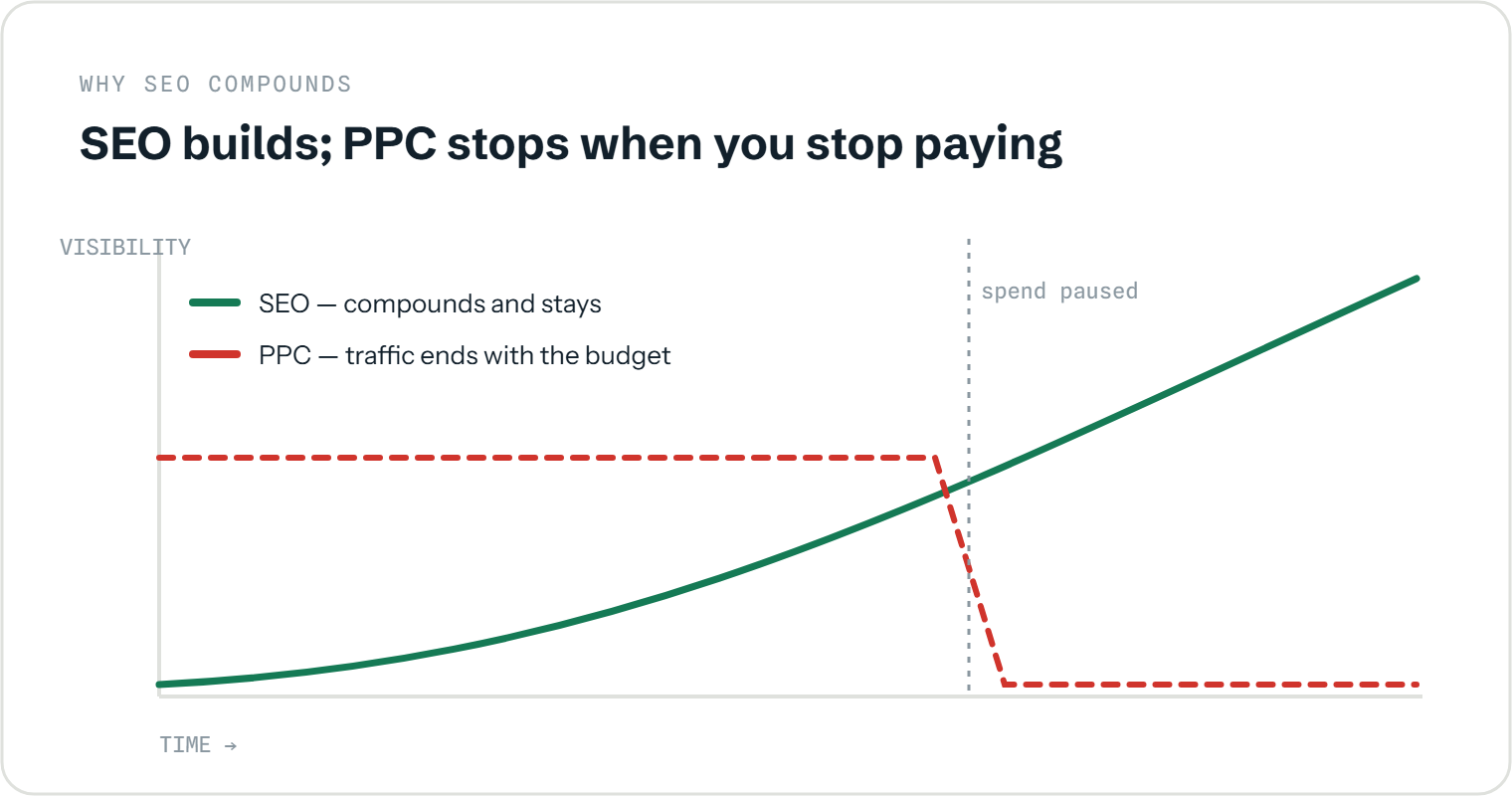
SEO and PPC aren't really rivals, but if you're choosing where to spend a limited budget first: PPC (pay-per-click ads) delivers traffic within hours and stops the moment you stop paying, while SEO (organic search) takes roughly 3–6 months to show results but keeps producing traffic and enquiries long after the work is done. SEM (search engine marketing) is the umbrella term that covers both. For most small businesses on a genuinely tight budget, that difference in longevity is the deciding factor.
What's the difference between SEO, PPC and SEM?
SEO is the practice of earning a position in Google's organic (unpaid) results through technical fixes, content and links. PPC (usually via Google Ads) is bidding for the "Sponsored" slots above and around those organic results, paying each time someone clicks. SEM is the older umbrella term covering both organic and paid search activity together; in practice most people now use it interchangeably with "paid search," which causes some of the confusion behind this question.
SEO vs PPC: cost and speed compared
| Factor | SEO (organic) | PPC (Google Ads) |
|---|---|---|
| Time to first results | 3–6 months typically | Same day (ads can go live within hours) |
| Cost model | Time-based retainer or project fee | Pay per click; cost scales directly with traffic volume |
| Typical UK small business spend | £400–£1,500/month for the work | £500–£3,000+/month ad spend, plus management time or fees |
| What happens when you stop paying | Rankings and traffic persist for months or years | Traffic stops within hours |
| Average organic vs paid click share | Organic results take roughly 65–70%+ of clicks on informational and mixed-intent searches | Paid ads take a larger share on the most commercial, high-intent searches |
| Best suited to | Compounding, long-term visibility | Immediate demand, offer testing, seasonal spikes |
When PPC wins
Pay-per-click is the right first move when a business genuinely needs enquiries this month and has no existing organic visibility to lean on — a new company, a new location, or a seasonal offer with a hard deadline. It's also the fastest way to test which keywords and offers actually convert before committing months of content and outreach to SEO around the wrong ones. And for hyper-competitive markets where ranking organically could realistically take years, PPC may be the only way to appear on page one at all in the short term.
When SEO wins
SEO wins on anything measured in years rather than weeks. Because you're not paying per click, cost doesn't rise every time a competitor increases their bid. That's a real risk with PPC in competitive sectors like legal, dental and home services, where cost-per-click has climbed steadily. SEO also builds an asset: content, technical foundations, links and AI-search visibility that keep working after the invoice is paid, rather than renting attention one click at a time.
Why most established businesses end up doing both
Once a business has SEO producing steady organic traffic, PPC often stays in the mix for good reason: defending brand-name searches from competitors bidding on them, filling seasonal gaps SEO can't move fast enough for, and taking additional shelf space on the results page — showing up in both the ads and the organic listings measurably increases total click share. The trade-off: running both properly isn't cheap, and a business that can only fund one channel well is usually better off than one running two channels badly. Half-budget PPC and half-budget SEO often outperforms neither.
So which should you do first?
If cash flow is genuinely tight and you need leads in the next few weeks, start with a small, tightly targeted PPC test while your SEO foundations (technical health, Google Business Profile, core content) are put in place in parallel. If you can survive a few quiet months and want a channel that gets cheaper per enquiry over time rather than more expensive, start with SEO. Either way, the sensible first step isn't guessing — it's an audit that shows clearly where you're starting from, which is exactly what informs the recommendation in our small business SEO guide.
If you are still deciding whether to spend anything at all, read is SEO worth it for a small business? For a month-by-month view of what to expect, see how long SEO takes to work.
Not sure which channel fits your budget?
A free audit call shows you where SEO and PPC would each get you, no obligation, no jargon.
Book a free audit